


After 12 years running communications for the global insurance industry’s biggest talent and culture initiative, we’ve learnt a thing or two about multi-stakeholder campaigns, keeping an idea relevant and building a movement capable of shifting behaviour.
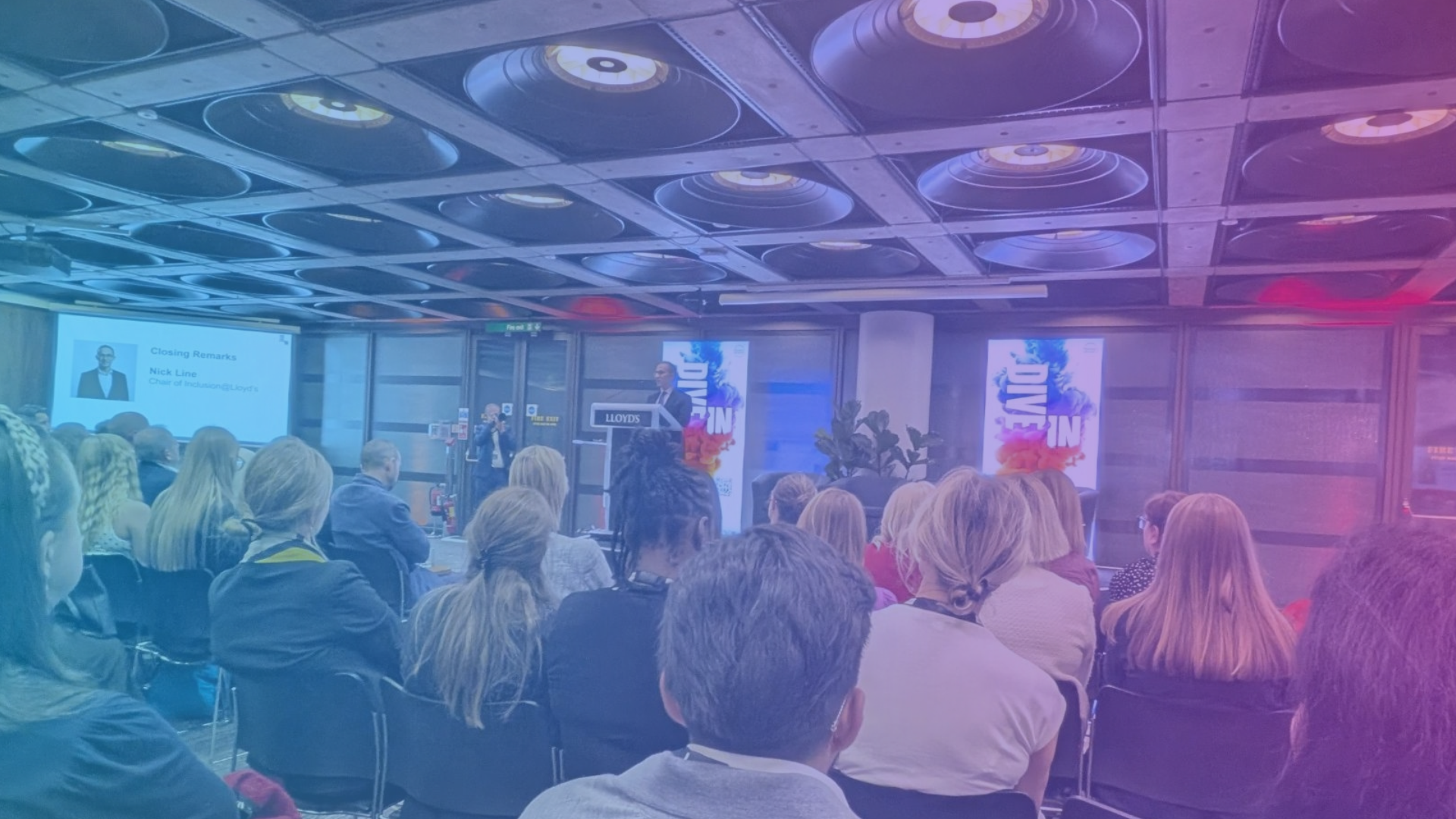
Dive In launched in 2015 as the signature initiative of Inclusion@Lloyd’s, a steering committee of senior leaders across the Lloyd’s of London insurance market around a shared challenge: how to shift the industry’s culture and compete for the best talent.
When Gong Communications (now part of Wilful) was appointed, we quickly realised there were already pockets of brilliant activity peppered across the market. What was missing was a common thread capable of weaving them together into something stronger and more visible. This was where the Dive In name and colourful ‘sploosh’ branding originated which gave us the springboard – or in this case, the diving board to rally these different groups around.
Our role was to turn that shared purpose into a story people wanted to be part of and bring it to life with eye-catching design, video and photography.
Since those first days in London, we’ve helped Dive In grow from an event attracting 1,700 people to a global movement that has delivered more than 1,000 events across 46 countries and engaged more than 180,000 people.
But the numbers only tell part of the story. Over that time, we’ve watched conversations that were once difficult or largely absent from the workplace become part of everyday business discussion, and in some cases translate into new company policies and practices. Dive In hasn’t done that alone, and neither have its communications, but we’ve seen first-hand the role communications can play in change: making good work visible, giving others something to emulate and occasionally creating just enough FOMO that nobody wants to be the organisation sitting on the sidelines.
So, what have we learnt?
- Make it easy for lots of people to tell one story
As Dive In grew, so did the number of people communicating it: sponsors, event organisers, employee networks, senior leaders and communications teams across different companies and countries.
The bigger the campaign became, the more important it was to make getting involved easy while keeping everyone singing from the same hymn sheet. Each year we developed a central theme and messaging, backed by communications toolkits with suggested emails, social posts and internal messaging, alongside an event playbook helping organisers create, run and promote their events.
- To reach beyond the choir, give people another way into the conversation
One of Dive In’s biggest challenges was reaching the middle manager who didn’t think diversity and inclusion was ‘their job’. We learnt not to assume that DEI itself was always the hook.
That became even more important as the external global conversation changed. In recent years, diversity and inclusion became increasingly politicised, and businesses were more conscious that the language they used could itself carry reputational risk. The answer wasn’t to retreat from the subject or quietly file off anything that might prove controversial. If anything, it forced us to sharpen the message: why does this actually matter to an insurance business?
The answer was much bigger than doing something because it was morally ‘the right thing’. The industry needs to attract and retain brilliant people, create cultures where they can do their best work and bring different perspectives to some pretty enormous challenges, from climate risk and cyber threats to AI. Inclusion wasn’t separate from those business priorities; it was part of how you delivered them.
- Keep the purpose; reinvent the expression
Twelve years is a long time to find something new to say about the same festival. The purpose didn’t need reinventing every September, but the challenge was how to keep it relevant each year.
A new theme gave everyone something fresh to get behind each year, while the creative got bigger and bolder: user-generated campaigns, physical activations, films with our long-time production partners Striker, and an annual ‘ident’ that opened every event and reminded someone sitting in Germany, Jakarta or Bermuda that they were part of something much bigger.
- Create FOMO: Make the movement visible and people want to be part of it
Growth itself became part of the Dive In story. More events, more countries and more organisations gave us evidence that something significant was happening across the industry. Communicating that momentum had a deliberate element of positive peer pressure to it. If one company was tackling menopause at work, talking seriously about mental health or changing its approach to inclusion, shouting about it didn’t just reward them. It showed thousands of people elsewhere in the industry what was possible and a challenge to take back to their own organisations.
That’s where communications can become part of behavioural change – making action visible inspired others to follow.
- Trust and relationships lead to longevity
Perhaps the final ingredient that kept a campaign going for 12 years: trust.
Working with Dive In year after year meant we built up a huge amount of knowledge – of the initiative, the insurance market, the people behind it and what had (and hadn’t) worked before. The client didn’t have to brief us from scratch every September and, as trust grew, we could be more useful: spotting what needed to change, challenging when we thought something wouldn’t work and knowing when to protect the things that made Dive In, Dive In.
That kind of relationship has to be earned. Clients don’t keep coming back simply because you know their history; you have to keep proving yourself. But continuity made the work better too. Twelve years in, we weren’t just communicating Dive In’s evolution. We’d become part of it.
So, how do you build a communications campaign that people still care about 12 years later?
You don’t keep saying the same thing for 12 years. You give lots of people ownership of one clear idea. You find new ways into the conversation as the world around it changes. You make the people doing good work visible, so others want to follow. And you keep evolving the expression without losing sight of why you started.
But our biggest lesson we’ll take from our time working with Dive In? The best long-running campaigns aren’t the ones that you manage to keep alive, they are the ones that are propelled by the enthusiasm and support of the people they are aimed at who have been inspired to take up the cause.