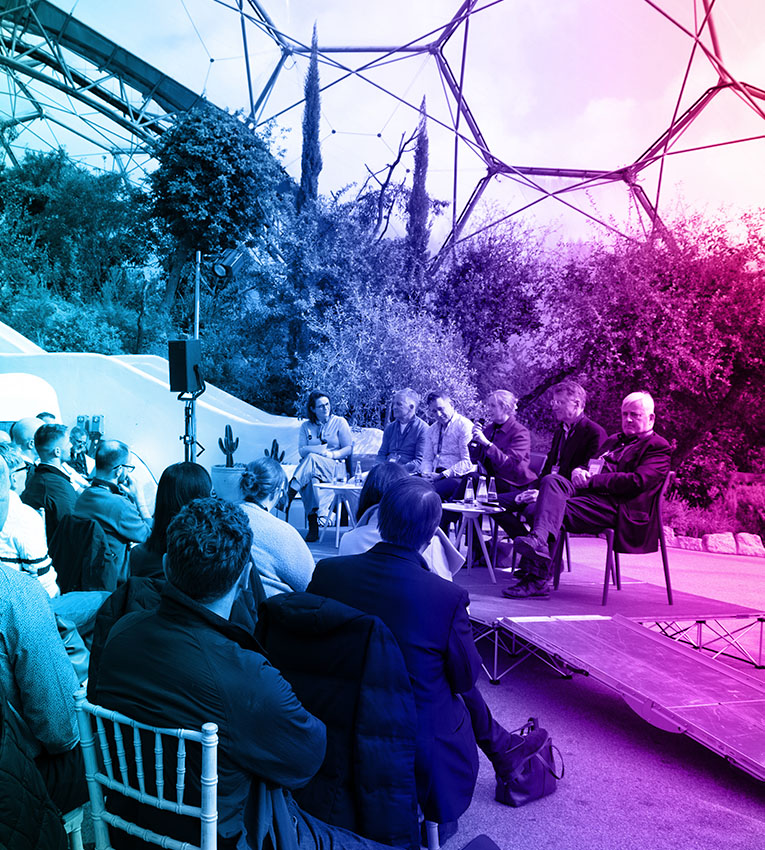



There’s something grounding about arriving at the Eden Project and being reminded that the biggest challenges we face are all connected, and that was the tone from the outset at Anthropy26.
More than 2,000 leaders from across business, government, civil society and culture came together for day one, not just to talk about Britain’s future, but to start making sense of how we move it forward. At a time when many people feel disconnected from decision-making, Anthropy is deliberately creating space for different voices to come together and take shared responsibility for what happens next.
A country at an inflection point
Across the opening sessions of the national gathering, a clear theme emerged – Britain isn’t lacking in potential, but it’s also not yet turning that potential into real, tangible progress.
Conversations quickly moved beyond diagnosis. How do we unlock growth in a way people actually feel? What does leadership look like when trust is low? And how do we navigate a more uncertain world without retreating from it?
Themes like trust, technology and leadership surfaced repeatedly, not as separate issues, but as part of the same challenge. There was a shared recognition that many of the systems we rely on are not keeping pace with the realities people are living.
“Britain isn’t broken. Politics is.”
One of the most talked about moments came from Andrew Griffith MP, who argued that the issue is not the country itself, but the pace at which politics is evolving.
When trust in politicians is this low, the question becomes whether people feel heard at all. His comments reflected a wider sentiment running through the day. Rebuilding trust requires more honesty, more real-world experience in leadership, and a willingness to confront longer-term challenges.
It set the tone for a broader shift in the conversation. It’s less about what’s wrong and more about what needs to change.
Innovation, in real life
If the morning focused on structural challenges, the FutureDome brought a different kind of energy.
From a live jet suit flight to advanced robotics and breakthrough technologies across AI, climate and space, it was a clear demonstration that the UK’s innovation ecosystem is not theoretical. It is already happening.
The challenge is ensuring that innovation translates into wider opportunity, and that growth is not just created, but shared.
Nature, science and perspective
A standout discussion between The Edge and Sir Tim Smit, alongside leading scientists, explored soil health and microbiomes.
It offered a useful shift in perspective. Some of the most powerful solutions to climate, health and biodiversity challenges already exist within natural systems we are only beginning to understand.
In a programme filled with future-focused technology, it was a reminder that progress is not only about building new systems, but also about valuing and learning from the ones we already have. It also reinforces a broader point we see in our work, that communicating climate effectively means connecting complex issues to real human impact and everyday understanding (something we explore further in our thinking on climate communications that work).
AI, trust and the systems we’re building
AI was a thread throughout the day, but the conversation has clearly evolved.
The focus is now less on capability and more on responsibility. How do we build systems that are trusted, inclusive and beneficial at scale? Who gets access, and who risks being left behind?
There was a clear sense that holding onto outdated models will slow progress, but equally that moving too quickly without building trust could deepen existing divides.
From discussion to responsibility
What sets Anthropy apart is not just the breadth of discussion, but the expectation of action.
Across day one, conversations moved towards practical collaboration. From unlocking overlooked talent to rethinking partnerships and aligning growth with social value, the emphasis was on what happens next. Because none of these challenges exist in isolation.
Growth, trust, innovation and resilience are deeply connected. And if there was one defining takeaway from day one, it is that progress will depend on recognising that and acting collectively.